

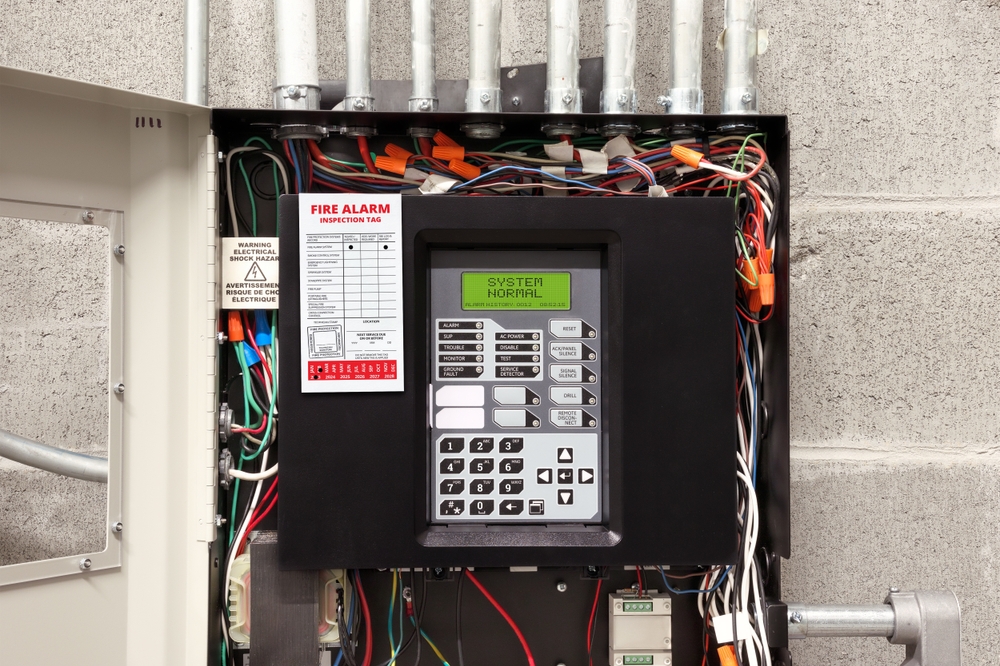
Commercial properties in Dalton face security and fire risks that can affect employees, customers, inventory, equipment, and day-to-day operations. From retail and office spaces near Walnut Avenue to industrial and manufacturing facilities throughout Whitfield County, having separate alarm systems can make monitoring and response more complicated than necessary.
Quick answer: Integrating security and fire alarm monitoring allows commercial property owners and managers to coordinate multiple life-safety and security functions through a more unified monitoring approach. Depending on the property and installed equipment, this can include intrusion detection, fire alarm monitoring, access control, video surveillance, and other systems. The goal is clearer oversight, faster recognition of alarm events, and a monitoring strategy suited to the building’s operations.
What local businesses should know
-
Integrated monitoring can help commercial property managers distinguish between security, fire, and other system events more efficiently.
-
Dalton’s mix of retail, office, warehouse, manufacturing, and industrial properties means monitoring needs can vary considerably from one building to another.
-
Properties operating outside standard business hours may benefit from monitoring that does not depend solely on someone being present to notice an alarm.
-
Businesses throughout Whitfield County should consider building layout, occupancy, operating hours, and existing alarm equipment before deciding how systems should work together.
-
Integration does not mean every device must perform the same function. Fire protection and security systems have different purposes and requirements.
Why Does Integrated Alarm Monitoring Matter for Dalton Commercial Properties?
Integrated alarm monitoring matters for Dalton commercial properties because it can give owners and managers a clearer way to oversee different security and life-safety events across one facility or multiple locations. This can be particularly useful for businesses with large buildings, restricted areas, valuable equipment, inventory, or operations that continue after normal office hours.
The Dalton area includes everything from storefronts and professional offices to warehouses and large industrial facilities. Properties near I-75 may have different security concerns from a small office closer to downtown, while facilities elsewhere in Whitfield County may need to account for larger sites, multiple entrances, loading areas, or limited occupancy during certain shifts.
Carpet Capital Multi-System, Inc. works with commercial properties in the area, and we can help businesses evaluate how security and fire alarm monitoring fit into their broader property protection needs.
What Do We Observe About Local Commercial Alarm Needs?
Our field-based approach starts with the property itself because commercial alarm needs depend heavily on building use, layout, occupancy, operating schedules, and existing equipment. Rather than assuming every area business needs the same configuration, these factors should be reviewed before recommending an integrated monitoring strategy.
For example, a retail property may prioritize public entrances and after-hours intrusion detection. A warehouse may need attention around loading areas, storage spaces, and employee access points. Manufacturing and industrial facilities can introduce additional considerations because of their size, equipment, processes, and operating schedules.
These are professional field considerations, not statistical claims about Dalton businesses.
How Can Integrated Monitoring Affect a Local Business?
Integrated monitoring can affect a local business by improving awareness of alarm events while reducing the need to treat every protection system as a completely separate operational concern. The practical benefit is better visibility into what type of event occurred and which system generated the signal.
For property managers responsible for multiple buildings or large facilities, that distinction matters. An intrusion alarm, fire alarm signal, and access-related event can require very different responses.
Integration may also help businesses create more consistent procedures for employees and managers. The exact capabilities depend on the installed systems, compatibility, monitoring arrangement, and property requirements.
What Warning Signs Suggest Your Alarm Setup Needs Attention?
Commercial properties should review their alarm setup when existing systems are difficult to manage, unreliable, outdated, or poorly matched to current building operations. Changes to the property or business can also create monitoring gaps that were not present when the original system was installed.
Warning signs can include:
-
Security and fire systems are monitored or managed through disconnected processes that create confusion.
-
Employees are unsure what different alarm signals mean or whom they should notify.
-
Building renovations have changed entrances, interior spaces, or occupancy patterns.
-
A business has expanded into additional areas without reviewing alarm coverage.
-
Existing equipment generates recurring trouble conditions or requires frequent attention.
-
Managers have limited visibility into after-hours alarm events.
-
Access points, storage areas, or loading zones have changed since the security system was designed.
-
Existing monitoring arrangements no longer reflect current operating hours or property use.
When Should a Dalton Business Call an Alarm Professional?
A Dalton business should call an alarm professional when alarm coverage, monitoring, system compatibility, or required fire and security functions need to be evaluated or changed. Employees can perform simple visual checks and follow manufacturer-approved procedures, but system design, wiring, programming, monitoring changes, and fire alarm work should be handled appropriately.
This becomes especially important after remodeling, adding entrances, changing how a building is occupied, expanding warehouse space, or taking over an existing commercial property.
Fire alarm systems also involve life-safety considerations that should not be treated as ordinary DIY security projects.
What Common Conditions Create Commercial Monitoring Gaps?
Commercial monitoring gaps commonly develop when buildings change but their alarm systems do not change with them. Growth, renovations, new operating schedules, separate systems, and changes in access patterns can all leave a property with protection designed for an earlier version of the business.
In the Dalton area, commercial buildings range from smaller downtown properties to facilities near major transportation corridors and industrial areas. Common causes of gaps include added doors, relocated offices, new storage configurations, altered employee access, and equipment that was installed at different times.
Another issue is system fragmentation. Adding individual solutions as needs arise can eventually create multiple technologies that require separate management.
How Can Businesses Maintain Integrated Alarm Systems?
Businesses can maintain integrated alarm systems by scheduling appropriate professional service while keeping basic internal procedures current throughout the year. Maintenance should address both the equipment and the people expected to respond when the system reports an event.
Property managers can periodically review contact lists, employee responsibilities, access permissions, and visible devices for obvious obstruction or damage. They should also consider whether renovations or operational changes have affected system coverage.
DIY work should stop before modifying fire alarm components, system programming, monitored connections, wiring, or other functions requiring trained service.
What Results Should Businesses Expect From Integration?
Businesses should expect integrated monitoring to provide a more coordinated approach to alarm awareness, not a promise that every emergency or security incident can be prevented. A properly planned system should reflect the property’s actual layout, operating patterns, equipment, and monitoring needs.
The outcome may include easier system management, clearer alarm information, and a better-defined response process. Results depend on the specific equipment and services selected.
What Mistakes Should Commercial Property Owners Avoid?
Commercial property owners should avoid treating integration as simply connecting every available device without first considering function, compatibility, and property needs. A useful system begins with understanding the building and determining what each component is supposed to accomplish.
Mistake: Adding equipment without reviewing the overall system.
Consequence: Separate additions can create a fragmented setup.
Better approach: Evaluate existing equipment and future needs together.
Mistake: Ignoring building changes.
Consequence: New doors or spaces may not fit the original protection plan.
Better approach: Review alarm coverage after renovations or operational changes.
Mistake: Treating fire and intrusion alarms as interchangeable.
Consequence: Important differences in purpose and requirements can be overlooked.
Better approach: Plan integration while preserving the appropriate role of each system.
What Is a Common Commercial Scenario in Dalton?
A common Dalton commercial scenario is a property that has accumulated separate security technologies as the business has expanded or changed. This is a representative scenario, not a specific Carpet Capital Multi-System, Inc. customer case study.
Imagine a Whitfield County facility with an existing fire alarm system, intrusion detection at exterior doors, cameras added later, and employee access controls installed during a subsequent expansion. Management now has several systems to oversee.
A professional evaluation can identify what equipment is present, how the systems currently operate, and where coordinated monitoring may improve management without assuming every component must be replaced.
What Service Solutions Can Support an Integrated Approach?
Integrated commercial protection can involve fire alarm monitoring, security monitoring, access control, video surveillance, and related system services when appropriate for the property. The right combination depends on the facility rather than a predetermined package.
A smaller office near downtown may need a different solution than an industrial property near I-75 or a larger operation elsewhere in Whitfield County. We can review the property’s needs and discuss which system functions should remain separate and which may benefit from coordinated management.
How Should Businesses Compare Their Alarm Options?
Businesses should compare alarm options based on risk, property use, system compatibility, management requirements, and long-term service needs rather than choosing solely by the number of features offered. An integrated approach is most useful when it makes protection easier to understand and manage.
Keeping existing systems may make sense when equipment remains suitable and compatible. Upgrading selected components may be appropriate when needs have changed. More extensive replacement may be considered when existing equipment cannot reasonably support the required functions.
A professional assessment can clarify those choices before equipment decisions are made.
What Areas Can Local Businesses Consider for Commercial Alarm Service?
Commercial alarm needs extend throughout Dalton and surrounding Whitfield County communities, including businesses in areas such as Rocky Face, Tunnel Hill, and Varnell. Properties serving or operating near neighboring North Georgia communities may also have similar monitoring considerations.
Service availability for a specific address should be confirmed directly with us.
What Can Happen When Alarm Problems Are Ignored?
Ignoring alarm system problems can leave commercial properties with unresolved coverage gaps, confusing procedures, unreliable equipment, or monitoring arrangements that no longer reflect how the building operates. For local businesses, those issues can become more significant as facilities expand or operating schedules change.
Waiting can also make future upgrades more complicated if outdated and newer components continue accumulating without an overall system plan.
FAQ About Commercial Security and Fire Alarm Monitoring
Can security and fire alarm monitoring be integrated in a Dalton commercial building?
Yes, security and fire alarm monitoring may be coordinated within a broader system strategy, depending on the installed equipment and property requirements. Fire and security functions still serve different purposes, so integration should preserve the appropriate operation of each system rather than treating them as identical.
Do Dalton businesses need to replace all existing alarm equipment to integrate monitoring?
Not necessarily. Existing equipment may sometimes remain useful depending on its condition, compatibility, configuration, and the desired monitoring functions. A system evaluation can determine what may be retained, what may require modification, and whether particular components should be upgraded or replaced.
Is integrated monitoring useful for Whitfield County warehouses?
Yes, integrated monitoring can be useful for warehouses where managers need oversight of multiple entrances, storage areas, loading areas, or after-hours activity. The appropriate setup depends on the warehouse layout, occupancy, operating schedule, existing equipment, and specific fire and security requirements.
Can businesses near I-75 benefit from coordinated security monitoring?
Yes, commercial properties near I-75 can consider coordinated monitoring just as businesses elsewhere in the Dalton area can. The decision should be based on the individual property’s access points, operating hours, building use, inventory, staffing, and existing systems rather than location alone.
Should alarm systems be reviewed after a commercial renovation?
Yes. Renovations can change doors, walls, room uses, occupancy patterns, equipment locations, and access routes. Those changes may affect how existing alarm components serve the building. A professional review can determine whether the current configuration still matches the renovated property.
How often should a Dalton commercial property review its alarm needs?
Commercial properties should review alarm needs whenever significant changes occur and follow applicable inspection, testing, maintenance, manufacturer, and service requirements for installed equipment. Expansion, remodeling, changes in occupancy, new operating hours, and recurring system issues are practical reasons to request an additional review.
Is integrated monitoring only for large Dalton industrial facilities?
No. Integrated monitoring can be considered for smaller offices, retail spaces, warehouses, and other commercial properties as well as larger industrial facilities. The value depends on how many systems need to be managed and whether coordination would improve the property’s security and life-safety oversight.
Can employees maintain commercial alarm systems themselves?
Employees can generally handle basic administrative tasks and approved visual checks, but technical modifications should be left to appropriate professionals. Fire alarm components, monitored connections, programming, wiring, and other specialized work should not be altered casually because changes can affect system operation and life-safety functions.
Build a Clearer Protection Plan for Your Dalton Property
Commercial properties change over time, and security and fire alarm monitoring should continue to reflect the way the building is actually used. Our local approach focuses on understanding the property, existing systems, and operational needs before discussing potential solutions.
Protect Your Dalton Commercial Property With a More Coordinated Approach
Get a professional look at your existing security and fire alarm monitoring setup and understand the options available for your property.