

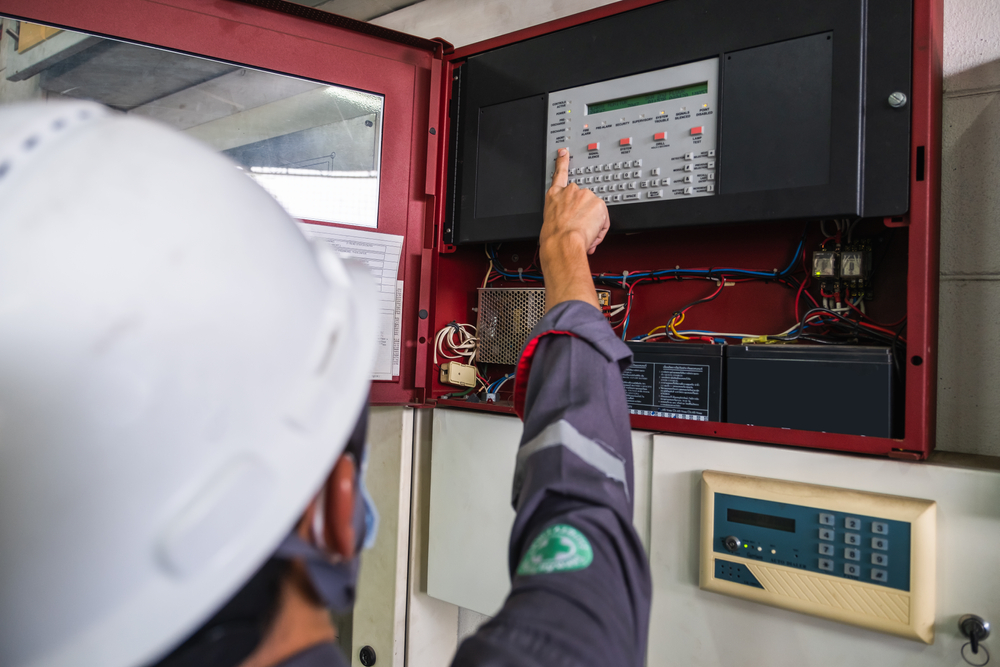
For a business owner in Dalton, fire alarm compliance affects more than the equipment mounted on the walls. A system that has not been properly inspected, maintained, modified, or documented can create problems during a fire inspection, tenant buildout, property renovation, or occupancy approval.
The requirements also matter across the area’s wide mix of commercial properties, from Downtown Dalton storefronts to manufacturing, warehouse, office, hospitality, and retail facilities near the I-75 corridor.
Quick answer: Commercial fire alarm systems in Dalton, GA must comply with applicable Georgia fire safety rules, locally enforced requirements, and adopted standards governing system design, installation, inspection, testing, and maintenance. Business owners should pay particular attention to annual inspection records, system deficiencies, building changes, and modifications that may require review or permitting by the Dalton Fire Marshal’s Office.
What local business owners should know
-
Georgia’s state minimum fire safety standards establish requirements that apply to many commercial buildings, including requirements involving fire alarm systems.
-
The City of Dalton Fire Marshal’s Office conducts fire and life safety inspections and reviews plans for proposed buildings and alterations.
-
Dalton’s pre-inspection materials state that applicable fire alarm systems should have an inspection performed by a Georgia-licensed contractor within the previous 12 months.
-
Renovations, tenant improvements, changes in occupancy, and modifications to an existing alarm system can create additional compliance considerations.
-
Commercial properties throughout Whitfield County should confirm which authority has jurisdiction over their specific address before planning alarm work.
Why Does Commercial Fire Alarm Compliance Matter in Dalton?
Commercial fire alarm compliance in Dalton matters because a working system must do more than sound an alarm. It must fit the building’s occupancy, configuration, life-safety requirements, and applicable codes while remaining properly inspected and maintained so occupants can receive effective warning during an emergency.
Dalton has an unusually broad mix of commercial and industrial properties. Downtown buildings can differ significantly from large facilities along major transportation and commercial corridors. Warehouses, manufacturing operations, offices, restaurants, hotels, retail spaces, and other occupancies can each present different fire protection considerations.
The Dalton Fire Marshal’s Office enforces Georgia’s State Minimum Fire Safety Standards as well as applicable local fire protection ordinances. Its responsibilities include inspecting existing buildings, reviewing plans and specifications, and conducting inspections connected with occupancy approval.
Carpet Capital Multi-System, Inc. prepared this guide to help area business owners better understand those responsibilities. We encourage property owners and managers to treat fire alarm compliance as an ongoing facility-management issue rather than something addressed only when an inspector is scheduled to arrive.
What Do Current Georgia Fire Alarm Standards Require?
Current Georgia fire alarm standards require applicable systems to follow the state’s adopted fire and life-safety codes, including requirements governing design, installation, performance, inspection, testing, and maintenance.
Georgia’s current State Minimum Fire Safety Standards adopt the 2024 International Fire Code with state modifications. The rules specify that fire alarm systems must be designed, installed, tested, and maintained according to NFPA 72 as adopted by Georgia. The current rules identify the 2022 edition of NFPA 72, National Fire Alarm and Signaling Code.
The exact requirements for an individual property depend on factors including occupancy, building configuration, use, existing protection systems, and whether work involves a new or existing building. That is why simply comparing one Dalton business with the building next door is not a reliable compliance strategy.
For projects involving new installations or changes to existing systems, the authority having jurisdiction should be consulted regarding applicable plan review, permits, inspections, and documentation.
What Local Inspection Requirements Should Dalton Businesses Know?
Dalton businesses should know that fire alarm inspection documentation may be reviewed as part of the city’s fire and life-safety inspection process.
The City of Dalton’s occupational tax certificate pre-inspection checklist states that, when applicable, a fire alarm system inspection should have been performed by a Georgia-licensed contractor within the previous 12 months. The same checklist addresses other life-safety items that may affect commercial occupancy.
This makes recordkeeping particularly important. A system may appear normal from the front panel while still having inspection, testing, documentation, device, communication, or maintenance issues that require attention.
Business owners should maintain accessible records of inspections, testing, repairs, system changes, and other relevant fire alarm work.
How Can Fire Alarm Compliance Affect a Dalton Business?
Fire alarm compliance can affect a Dalton business through inspection results, occupancy approvals, renovation schedules, operational downtime, and the safety of employees, customers, tenants, and visitors.
A deficiency discovered immediately before an important inspection can be much more disruptive than one identified during routine maintenance. Depending on the issue, correcting it may require troubleshooting, replacement components, additional testing, documentation, or coordination with local officials.
This is especially relevant for commercial facilities undergoing tenant improvements or changes in use. Even a renovation that appears unrelated to the alarm system can alter walls, room layouts, exits, notification coverage, or other building characteristics that need professional evaluation.
What Are Common Warning Signs of a Fire Alarm Compliance Problem?
Common warning signs of a fire alarm compliance problem include unresolved panel conditions, overdue inspections, undocumented building changes, damaged devices, and repeated system trouble signals.
Watch for these specific concerns:
-
The fire alarm panel shows a recurring trouble, supervisory, or fault condition.
-
Your most recent professional inspection occurred more than 12 months ago or you cannot locate the inspection record.
-
Smoke detectors, pull stations, horns, strobes, or other devices have been painted, damaged, blocked, covered, or removed.
-
Renovations have changed walls, ceilings, room configurations, or tenant spaces without reviewing the alarm system.
-
Devices have been disconnected because of recurring nuisance alarms.
-
Your business has changed occupancy or substantially changed how part of the building is used.
-
Employees do not know whom to contact when the system reports a problem.
-
Previous inspection deficiencies remain unresolved or lack documentation showing corrective work.
A normal-looking control panel does not by itself establish that every component of the system is compliant.
When Should a Dalton Business Call a Fire Alarm Professional?
A Dalton business should call a qualified fire alarm professional when a system has unresolved trouble conditions, requires its periodic inspection, has been altered, or may be affected by renovations, occupancy changes, or failed components.
Facility personnel can safely perform basic visual observations, such as noticing an obstructed device or reporting an unusual panel indication. They should not make unapproved wiring changes, relocate devices, disable system components, or attempt technical repairs without appropriate qualifications.
Georgia regulates low-voltage contracting, including alarm work. Using appropriately licensed professionals helps ensure that technical work is handled by people authorized to perform the applicable services.
What Commonly Creates Fire Alarm Compliance Issues in Local Commercial Buildings?
Common fire alarm compliance issues in local commercial buildings come from missed maintenance, undocumented renovations, aging equipment, tenant changes, and alterations made without considering the complete life-safety system.
1. Renovations and tenant improvements
A retail suite near Walnut Avenue or an office in Downtown Dalton may be remodeled without anyone initially considering whether walls, ceilings, or room layouts affect alarm devices.
2. Deferred inspection or testing
Busy businesses sometimes postpone life-safety maintenance because the system appears to be operating normally. Required inspection and testing is intended to identify conditions that may not be obvious during ordinary operation.
3. Changes in building use
A space that changes from one type of operation to another may be subject to different requirements. Occupancy and use should be evaluated rather than assuming the existing system automatically remains appropriate.
4. Aging or damaged equipment
Commercial environments can be hard on electronics and field devices. Dust, construction activity, accidental impacts, electrical problems, and normal component aging can all lead to deficiencies.
5. Uncoordinated modifications
Adding, moving, or removing devices without considering the entire system can create coverage, programming, documentation, or inspection problems.
How Can Dalton Businesses Prevent Fire Alarm Compliance Problems?
Dalton businesses can prevent many fire alarm compliance problems by keeping inspections current, maintaining records, correcting deficiencies promptly, and reviewing the system before renovations or changes in occupancy begin.
Create a recurring life-safety calendar instead of relying on memory. Keep alarm records together so facility managers can quickly find inspection reports, repair documentation, and information about system modifications.
Before a tenant buildout or renovation, include the alarm system in the planning conversation. This is particularly useful for commercial properties where contractors may be modifying ceilings, partitions, electrical systems, or room layouts.
DIY involvement should stop at safe observation and facility management. Technical system testing, programming, wiring changes, device replacement, and design decisions should be handled by appropriately qualified professionals.
What Results Should You Expect From Professional Fire Alarm Service?
Professional fire alarm service should give a Dalton business a clearer understanding of system condition, identified deficiencies, completed work, and any next steps necessary for the particular property.
An inspection does not mean every system will automatically pass without corrections. Its value is identifying problems before they remain hidden or become more disruptive.
Depending on the condition of the system, follow-up may include repairs, device replacement, troubleshooting, documentation updates, additional testing, or evaluation of changes to the building.
What Fire Alarm Compliance Mistakes Should Business Owners Avoid?
The biggest fire alarm compliance mistakes are assuming a quiet panel means the system is compliant, waiting until an inspection to address problems, and making building changes without reviewing their fire alarm impact.
Mistake: Waiting for the Fire Marshal to identify deficiencies.
Consequence: Problems may surface at the least convenient point in an occupancy, renovation, or business process.
Better approach: Maintain a proactive inspection and service schedule.
Mistake: Treating nuisance alarms by disabling equipment.
Consequence: The underlying fault remains and system protection may be compromised.
Better approach: Have the cause professionally diagnosed.
Mistake: Remodeling first and checking the alarm system afterward.
Consequence: New walls or altered spaces can create additional work and project delays.
Better approach: Review fire alarm implications during project planning.
Mistake: Losing inspection documentation.
Consequence: Facility managers may have difficulty establishing what service was completed and when.
Better approach: Maintain organized life-safety records at the property.
What Is a Common Fire Alarm Scenario for a Dalton Commercial Property?
A common local scenario is a business preparing for a tenant renovation only to discover that changes to walls and room configurations also affect the existing fire alarm system.
The property owner may initially view the project as a simple interior remodel. Once life-safety requirements are considered, alarm devices or system programming may also need evaluation. Depending on the work, local plan review, permitting, inspection, and final approval considerations can become part of the project.
Addressing those questions early is generally easier than discovering them immediately before the business expects to occupy the renovated space.
What Fire Alarm Services Can Help Maintain Compliance?
Fire alarm inspection, testing, troubleshooting, repair, system modification, and professional evaluation can help businesses identify and correct conditions that affect reliable operation and code compliance.
The appropriate service depends on the building and the issue. An existing system with a trouble signal presents a different problem from a tenant renovation requiring multiple device changes or a property being evaluated for a new alarm system.
Our goal is to help businesses understand the condition of their system and determine the appropriate next step without treating every situation as the same project.
Should You Handle Fire Alarm Issues In-House or Call a Professional?
Business owners can handle basic visual monitoring and recordkeeping in-house, but technical fire alarm work should be performed by qualified professionals when it involves system testing, wiring, programming, repair, device placement, or code compliance.
A facilities employee can report that a strobe is damaged or a panel displays a trouble message. That is useful information. Opening equipment and attempting an improvised repair is a different matter.
For Dalton properties, professional involvement also helps owners account for Georgia standards and local Fire Marshal requirements instead of considering only whether a device appears functional.
What Areas Around Dalton Face Similar Fire Alarm Considerations?
Businesses in Dalton and surrounding Whitfield County communities can face many of the same fire alarm inspection, maintenance, and renovation concerns, although the authority having jurisdiction may differ by property location.
Nearby communities include Rocky Face, Tunnel Hill, Varnell, and Cohutta. Businesses outside the City of Dalton should verify the applicable permitting, inspection, and enforcement authority for their exact location before beginning fire alarm work.
What Can Happen If a Business Ignores a Fire Alarm Problem?
Ignoring a fire alarm problem can allow a relatively manageable deficiency to become a larger safety, inspection, scheduling, or operational issue.
A persistent trouble condition may point to a component or communication problem. An overdue inspection can leave a business without current documentation. An undocumented renovation may create complications when the property later undergoes inspection or another construction project.
Addressing concerns early gives property owners more time to understand the problem and coordinate corrective work without unnecessary last-minute disruption.
Frequently Asked Questions About Commercial Fire Alarms in Dalton
How often should a commercial fire alarm system be inspected in Dalton, GA?
Dalton’s occupational tax certificate pre-inspection checklist states that an applicable fire alarm system should have an inspection performed by a Georgia-licensed contractor within the previous 12 months. Specific inspection and testing activities can depend on the system and adopted standards, so businesses should maintain an appropriate professional service schedule.
What fire alarm code applies to businesses in Dalton, GA?
Commercial properties in Dalton are subject to applicable Georgia State Minimum Fire Safety Standards and local enforcement requirements. Georgia currently adopts the 2024 International Fire Code with modifications and the 2022 edition of NFPA 72 for fire alarm and signaling systems, subject to Georgia’s adopted amendments.
Who enforces commercial fire codes in Dalton?
The City of Dalton Fire Marshal’s Office handles local fire and life-safety enforcement within its jurisdiction. Its responsibilities include inspections of existing buildings, review of plans and specifications for proposed work, and inspections associated with building occupancy and fire protection requirements.
Can I modify my Dalton business’s fire alarm system during a remodel?
Fire alarm modifications during a Dalton commercial remodel may require professional design or installation work as well as local review, permitting, or inspection depending on the project. Before moving or removing devices, confirm requirements with a qualified alarm professional and the authority having jurisdiction.
Does a fire alarm trouble signal mean the system has failed?
A trouble signal does not necessarily mean the entire system has failed, but it indicates a condition that should not be ignored. Causes vary and can involve devices, wiring, power, batteries, communications, or other components. Have recurring or unexplained trouble conditions evaluated by a qualified professional.
Can our employees test or repair the commercial fire alarm?
Employees can report visible problems and panel conditions, but technical testing, repairs, programming, wiring, and system modifications should be left to properly qualified personnel. Georgia regulates low-voltage contracting, including alarm contracting, making professional qualifications an important consideration when selecting someone to perform system work.
Will changing tenants affect a commercial fire alarm system in Whitfield County?
A tenant change can affect fire alarm requirements if it changes occupancy, use, floor layout, construction, or other life-safety conditions. Property owners should have those implications reviewed before assuming the existing system is automatically suitable for the new tenant or business operation.
Should we check the fire alarm before renovating a Downtown Dalton building?
Yes. Fire alarm implications should be considered before renovation begins, especially when work changes walls, ceilings, exits, rooms, or tenant configurations. Early review can identify required system changes while other construction planning is underway instead of creating an unexpected issue near the end of the project.
Protect Your Dalton Business With a Fire Alarm System You Can Rely On
Commercial fire alarm compliance is easier to manage when inspection, maintenance, documentation, and building changes are addressed proactively. We can help you evaluate your system and determine what service may be appropriate for your Dalton commercial property.